Dubai Flower Centre, Offices 205 & 206, Dubai
24/7 support
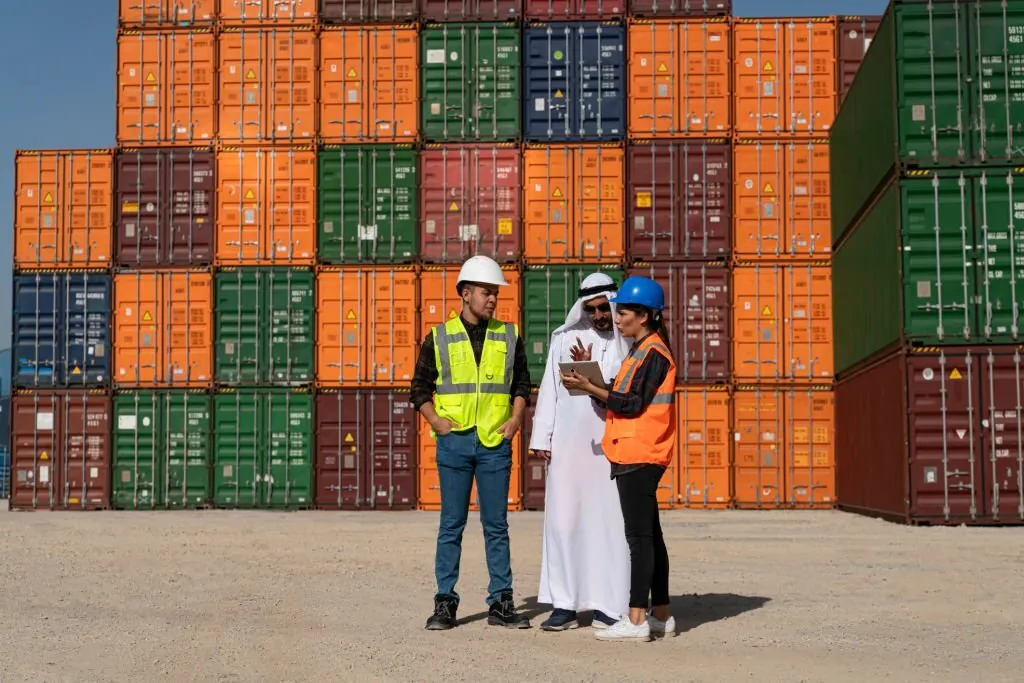
We file your import and export declarations with Dubai Customs, work out the duty and VAT before you pay, arrange permits for controlled goods and attend inspections. Once customs releases the cargo at Jebel Ali, Dubai Airport or the border, it comes straight on to you.
Invoice, packing list and bill of lading compared line by line before anything is filed.
Each product put under the right tariff code, so you know the duty before the goods arrive.
Approvals for food, cosmetics, medicines and other controlled goods applied for in advance.
Delivery order collected and the cargo brought to your door as soon as customs lets it go.
Why OFS for customs clearance
Most hold-ups at customs start with a piece of paper: an invoice that doesn’t match the packing list, a missing certificate of origin or a permit nobody applied for. We go through your documents while the goods are still on the way, sort out the gaps with your supplier and file the declaration as soon as the shipment arrives.

Do you need a clearing agent?
Not sure? Send us the invoice and we will tell you
Types of customs clearance
The declaration depends on where the goods come from and where they go next. These are the ones we file most often.
Goods bought abroad to sell or use in the UAE. Duty and VAT are paid before customs releases them.
Goods sold to a buyer abroad. We file the export declaration and arrange the certificate of origin.
Stock held in Jebel Ali Free Zone or another free zone that moves into the local market.
Goods brought into Dubai and sent on to another country, straight away or after a spell in storage.
Cargo landed in Dubai and trucked on to another GCC country under a transit declaration.
Equipment, exhibition stands and samples that come in for a while and then leave the UAE again.
Our customs clearance services
From the first declaration to the refund on goods you send back out, the same customs team works on your file. You always know who is handling your shipment, and you get one quote for all of it.
Import declaration, duty and VAT payment, inspection if one is called, and release of the cargo.
Export declaration, certificate of origin and the papers your buyer’s customs will ask to see.
The right tariff code for every product. It sets the duty rate and tells us which permits apply.
Approvals from the authority in charge, such as the municipality for food or the health ministry for medicines.
Moves in and out of Jebel Ali Free Zone, re-exports, and transit by road to other GCC countries.
Temporary admission deposits, refund claims on re-exported goods, and help when a shipment is held.
Documents
What we need depends on the goods, but most shipments use the papers listed here. A missing one is the most common reason cargo sits at the port.
Need an invoice attested? See our invoice attestation service
How it works
Five steps from the first document to your door. We let you know as each one is done.
Invoice, packing list and bill of lading, ideally before the goods arrive.
We match the papers, set the HS codes and see whether a permit is needed.
The declaration goes to customs and you get the duty and VAT figure to approve.
Duty and VAT are paid. If customs picks the shipment for inspection, we attend it.
We collect the delivery order and bring the cargo to your warehouse.
Enter the amounts in dirhams. Ask us to confirm the duty rate for your goods.
An estimate only. Customs fees and clearance charges are not included.
Get a clearance quoteCustoms duty and VAT
Most goods pay 5% customs duty on their CIF value: the cost of the goods plus insurance and freight to the UAE. Import VAT of 5% is then charged on the CIF value plus the duty.
Some goods are duty free, and a few, such as tobacco and alcohol, pay much more. Our quote lists the duty, the VAT, the customs fees and our own charge on separate lines.
Customs clearance FAQs
Short answers on duty, documents, timing, HS codes and free zones.
Talk to our customs team
Send us the invoice and packing list before the goods ship, and we will check them for you.
A customs clearance agent, also called a customs broker, prepares and files the customs declaration for your goods, works out and pays the duty and VAT, arranges any permits and deals with customs if the shipment is inspected. In Dubai, declarations are filed online by licensed clearing companies on behalf of the importer or exporter.
When the documents are complete and no permit or inspection is needed, sea and air cargo often clears within one working day of arrival. Controlled goods, an inspection or papers that don’t match can add several days, which is why we check everything before the goods arrive.
The standard rate is 5% of the CIF value, which is the price of the goods plus freight and insurance to the UAE. Some goods are exempt, and alcohol and tobacco products pay much higher rates. Import VAT of 5% is then added on the CIF value plus the duty.
Usually a commercial invoice, a packing list, the bill of lading or air waybill and a certificate of origin. Invoices for goods worth AED 10,000 or more also need attestation, and controlled goods need a permit. The importer must hold a trade licence and a customs code.
Yes. A company importing commercial goods needs a customs client code, which is issued against its trade licence. If you are new to importing, we can tell you what to register and in which order.
The HS code is the number that identifies a product in the customs tariff. It decides the duty rate, whether a permit is needed and sometimes how closely the shipment is checked. A wrong code can mean paying too much duty, or a fine and a delay when customs corrects it.
Yes. Goods kept in a free zone such as Jebel Ali Free Zone pay no duty or import VAT while they stay there. When they move into the UAE mainland, an import declaration is filed and the duty and VAT are paid at that point.
Yes. Equipment, exhibition goods and samples that will leave again can come in under temporary admission. Instead of paying duty, a deposit or bank guarantee is lodged and returned once the goods are exported.
Customs usually holds cargo over a missing document, a permit, a question about the value or the HS code, or an inspection. We find out the reason, give customs what it asks for and keep you updated until the goods are released.
Talk to our customs team
Send us the invoice and packing list before the goods ship, and we will check them for you.
Send us the invoice and the bill of lading. We will reply with the duty, any papers still missing and our price.
| Cookie | Duration | Description |
|---|---|---|
| cookielawinfo-checkbox-analytics | 11 months | This cookie is set by GDPR Cookie Consent plugin. The cookie is used to store the user consent for the cookies in the category "Analytics". |
| cookielawinfo-checkbox-functional | 11 months | The cookie is set by GDPR cookie consent to record the user consent for the cookies in the category "Functional". |
| cookielawinfo-checkbox-necessary | 11 months | This cookie is set by GDPR Cookie Consent plugin. The cookies is used to store the user consent for the cookies in the category "Necessary". |
| cookielawinfo-checkbox-others | 11 months | This cookie is set by GDPR Cookie Consent plugin. The cookie is used to store the user consent for the cookies in the category "Other. |
| cookielawinfo-checkbox-performance | 11 months | This cookie is set by GDPR Cookie Consent plugin. The cookie is used to store the user consent for the cookies in the category "Performance". |
| viewed_cookie_policy | 11 months | The cookie is set by the GDPR Cookie Consent plugin and is used to store whether or not user has consented to the use of cookies. It does not store any personal data. |
